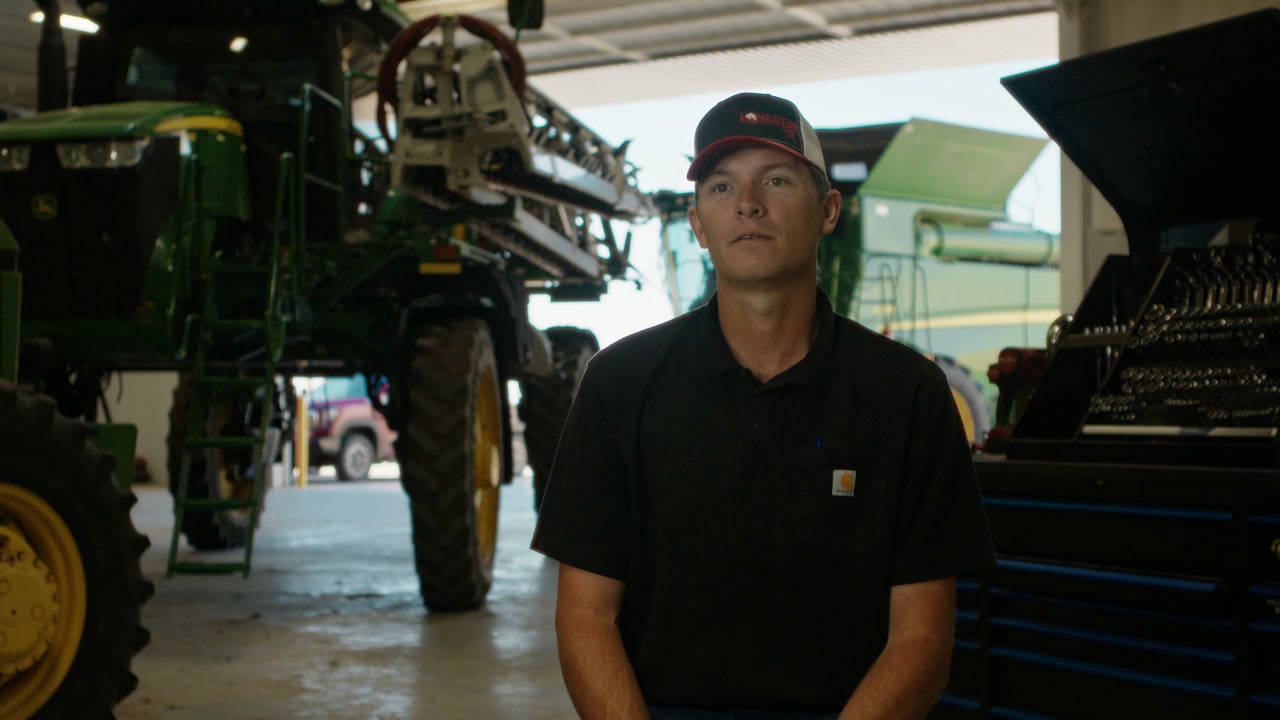
Located in Verona, North Dakota, Magill Farms has flourished as a family-run operation for over 100 years, spanning four generations. Today, Dalton Magill and his brother, Garrett, along with their father, Charles, carry the torch, overseeing 4,000 acres of farmland, primarily growing corn and dry edible beans. They also manage a cow-calf operation with a small feedlot, further diversifying their agricultural enterprise.
Weed management, particularly of water hemp and kochia, has become increasingly challenging for Magill Farms. These highly-adaptable weeds are notorious for their rapid growth and resistance to herbicides; a single water hemp plant can produce over one million seeds. Weather also complicates weed management, with short planting windows and unpredictable storms adding pressure on the Magills to act quickly.
“Once weeds like water hemp get out of control, they can devastate fields for years,” says Dalton. The Magills use crop rotation as a key strategy. By rotating crops like soybeans and red beans, they’re able to use different herbicides and disrupt weed cycles, which helps preserve soil health and reduce resistance. Yet, despite these efforts, the rising cost of herbicides combined with diminishing efficacy pushed them to look for more efficient solutions.
“The less chemical we use, the better – for soil health, weed resistance, and our bottom line. We needed a smarter way to reduce herbicide usage,” Dalton explains.
For the 2024 season, Magill Farms took a major step forward in its weed management strategy by adopting precision spraying for the first time. The Magills chose the Greeneye system after attending a live demonstration in Arizona. Seeing the system perform in real time was a key moment – convincing them that precision spraying represented the future of agriculture.
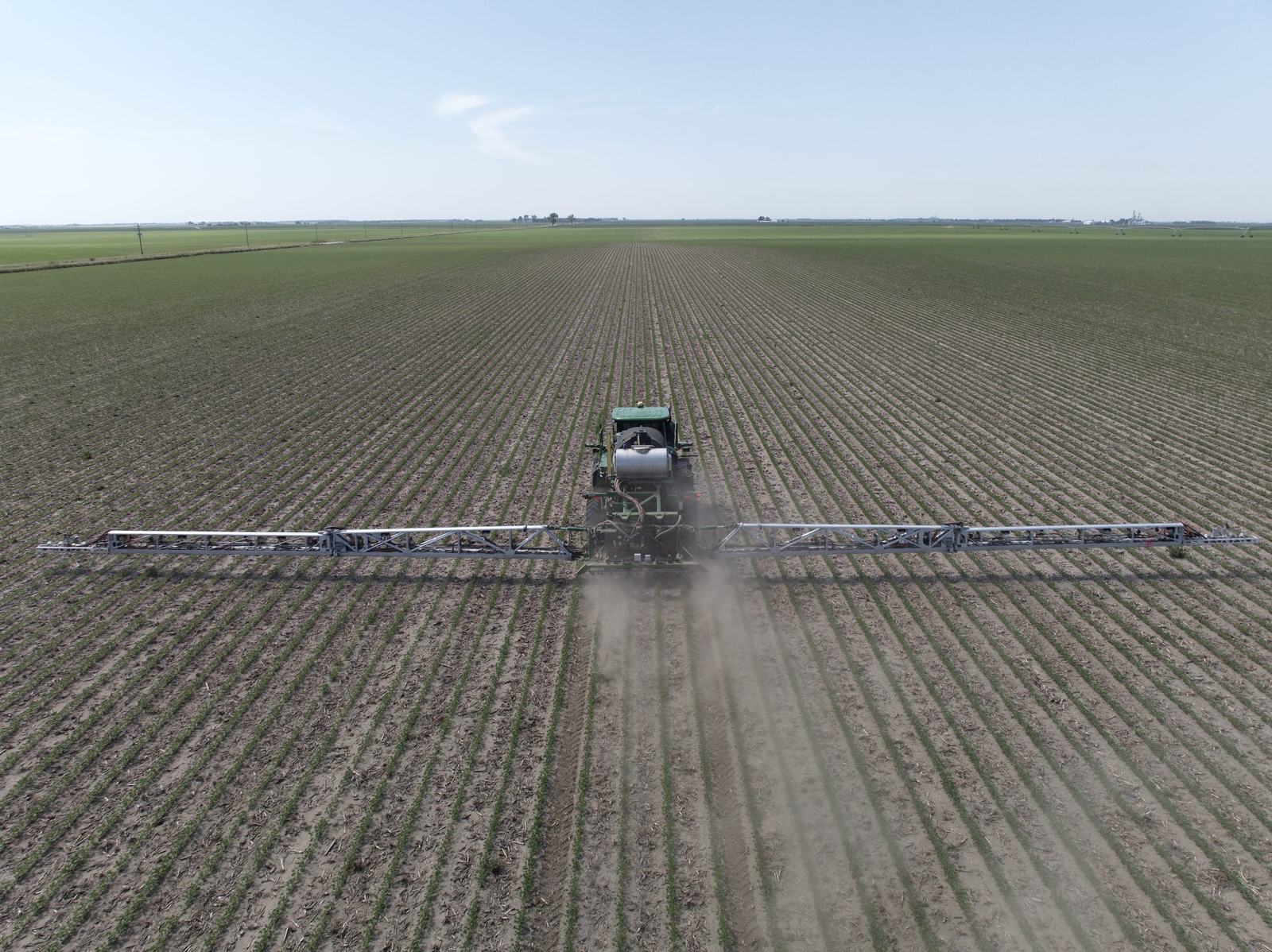
The Greeneye system combines state-of-the-art hardware with proprietary artificial intelligence to identify and spray weeds – even amongst crops – with extremely high accuracy. By targeting only the weeds, it is proven to reduce non-residual herbicide use by an average of 87% compared to conventional broadcast spraying. This precision approach aligns seamlessly with Magill Farms’ mission: cutting chemical use without compromising weed control.
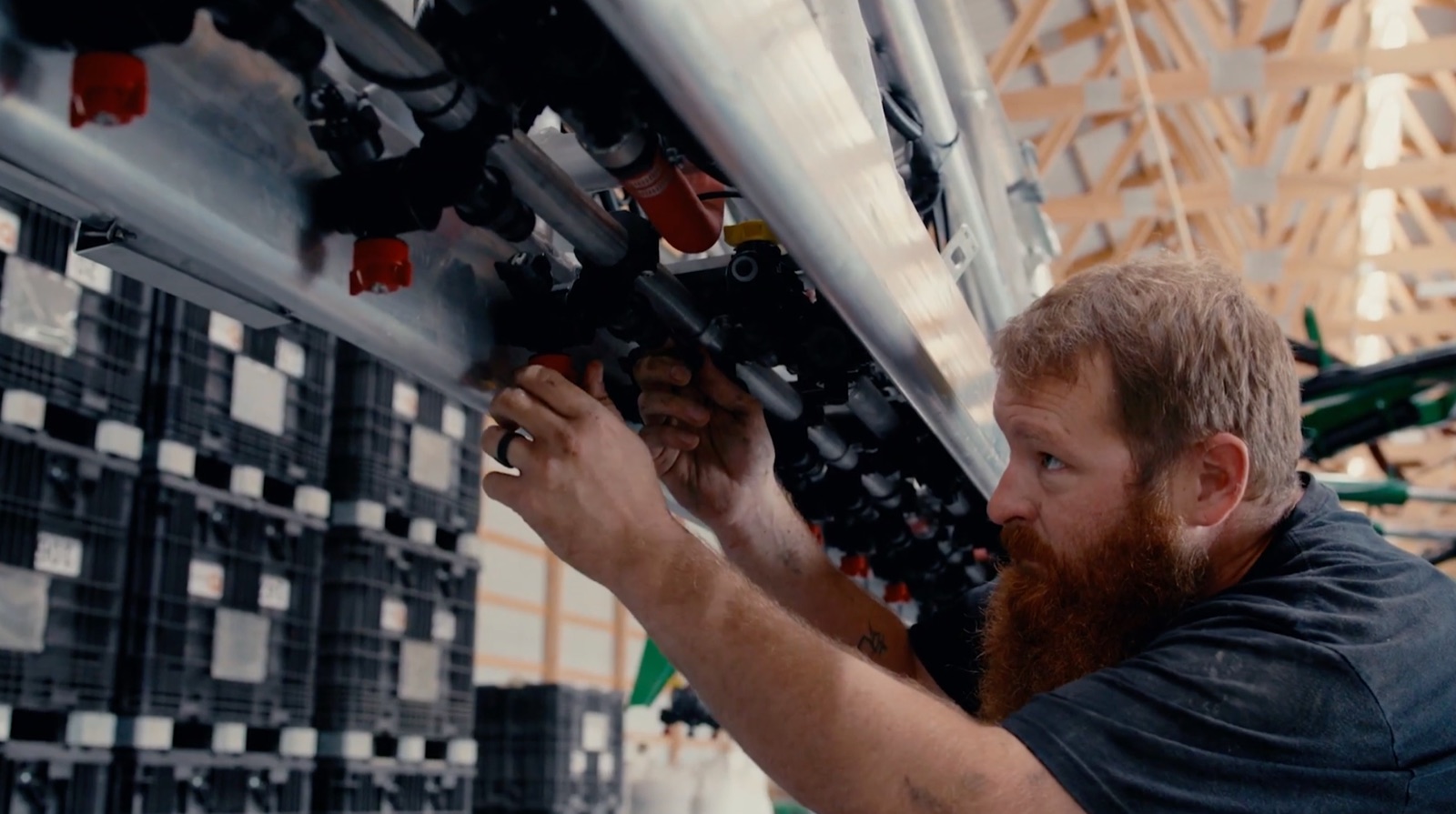
Equally important to the Magills’ decision was the system’s easy integration with their existing equipment. As a retrofit solution, the Greeneye system enabled them to upgrade their current John Deere sprayer without the cost, complexity, or commitment of buying a new sprayer or paying ongoing subscription fees. The hardware – including cameras, sensors, high-intensity lights, and nozzles – came pre-installed on Greeneye’s proprietary aluminum boom, which simply replaced the original boom on their sprayer. That level of flexibility made adoption straightforward, cost-effective, and practical for the Magills’ operation.
Functionality in the field was another major advantage. One standout feature was the Greeneye system’s dual tank/line configuration, which enables simultaneous precision and broadcast spraying. This provided the Magills with more versatility, allowing them to tailor their spraying approach to specific field conditions.
Operational flexibility was further enhanced by the system’s high-intensity lighting, which made nighttime spraying a viable option.
For the 2024 season, the Magills deployed the Greeneye system across 2,000 acres of pinto beans and 300 acres of soybeans and corn. The results were immediate. During pre-emergence applications, herbicide use dropped by 80%. Post-emergence treatments saw a 65–70% reduction, depending on the crop and field conditions. Altogether, this translated to a cost saving of $20 per acre – freeing up significant capital that could either boost the farm’s bottom line or be reinvested into more effective tank mixes.

For Dalton, however, the benefits go beyond the numbers. “In addition to enabling us to realize substantial savings, the Greeneye system also helped to improve our productivity,” he explains. “In a single pass, we could apply our residual product while simultaneously targeting weeds with precision spraying – eliminating the need for extra trips across the field. It saved us so much time and effort.”
Beyond operational efficiency, the Greeneye system also supports the Magills’ commitment to environmental stewardship. By reducing herbicide use, it has not only cut input costs but is also helping to reduce the farm’s environmental footprint.
“We were able to save on herbicides while still achieving the same level of weed control,” says Dalton. “That’s a big win for us and for the land we farm.”
By combining precision, sustainability, and cost-effectiveness, the Greeneye system has provided the Magills with a smarter, more efficient way to manage their farm. In 2025, their second season using the system, the family was eager to explore new ways to build on its success.
One major step planned was expanding its use to include post-emergence spraying on corn, a first for Magill Farms. Dalton is also interested in the system’s potential for advanced crop health treatments, such as targeted micronutrient applications.
In addition to expanding field applications, Dalton is also focused on maximizing the value of the detailed data generated by the system. Tools like weed maps and stem counting offer new insights for fine-tuning decision making and improving productivity. Planned software upgrades – such as coverage maps to eliminate overlap during residual applications – were expected to bring even greater efficiency and control.
“We’ve come a long way from where we started,” Dalton reflects. “And it’s exciting to imagine where this technology will take us next.”