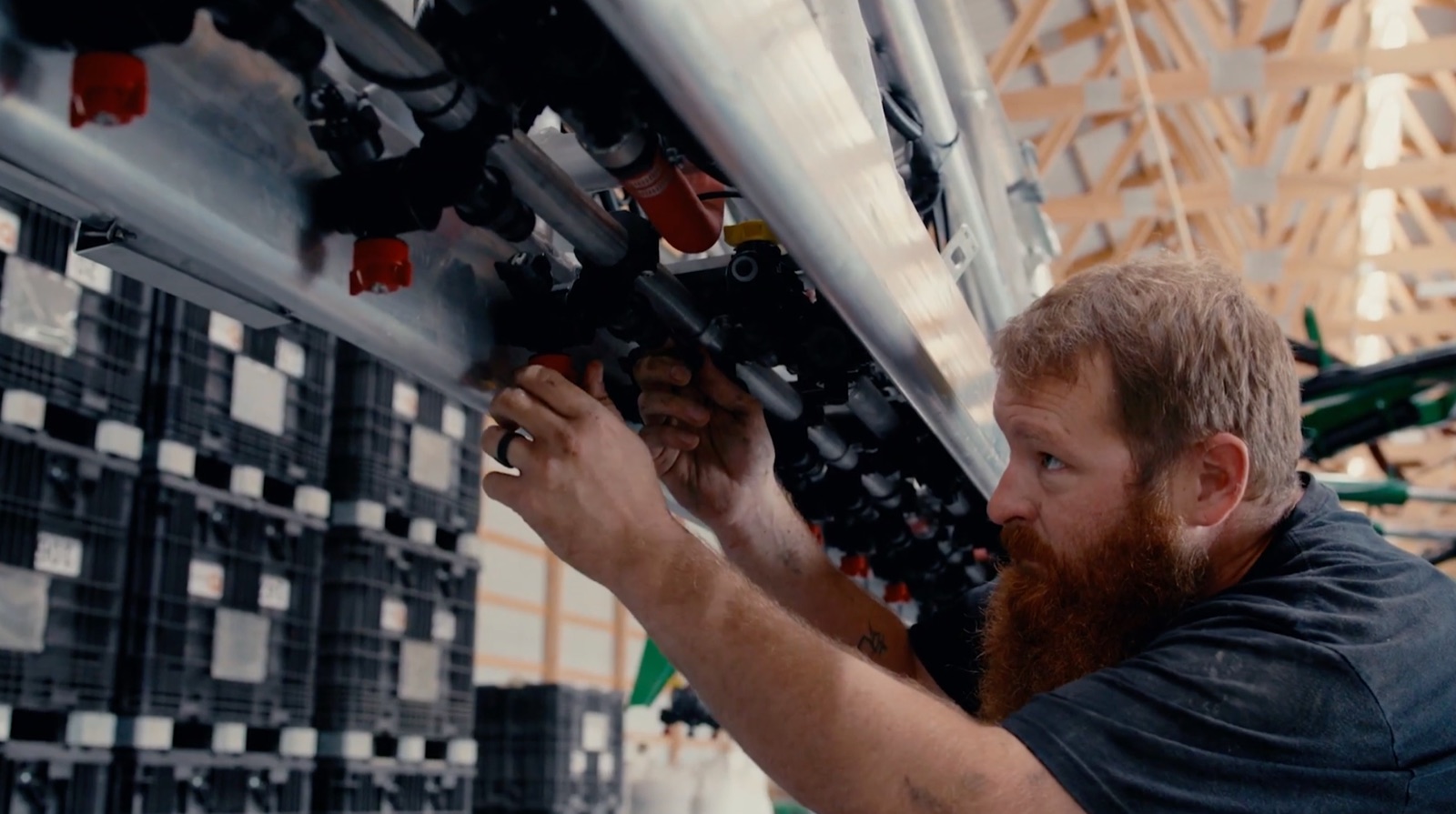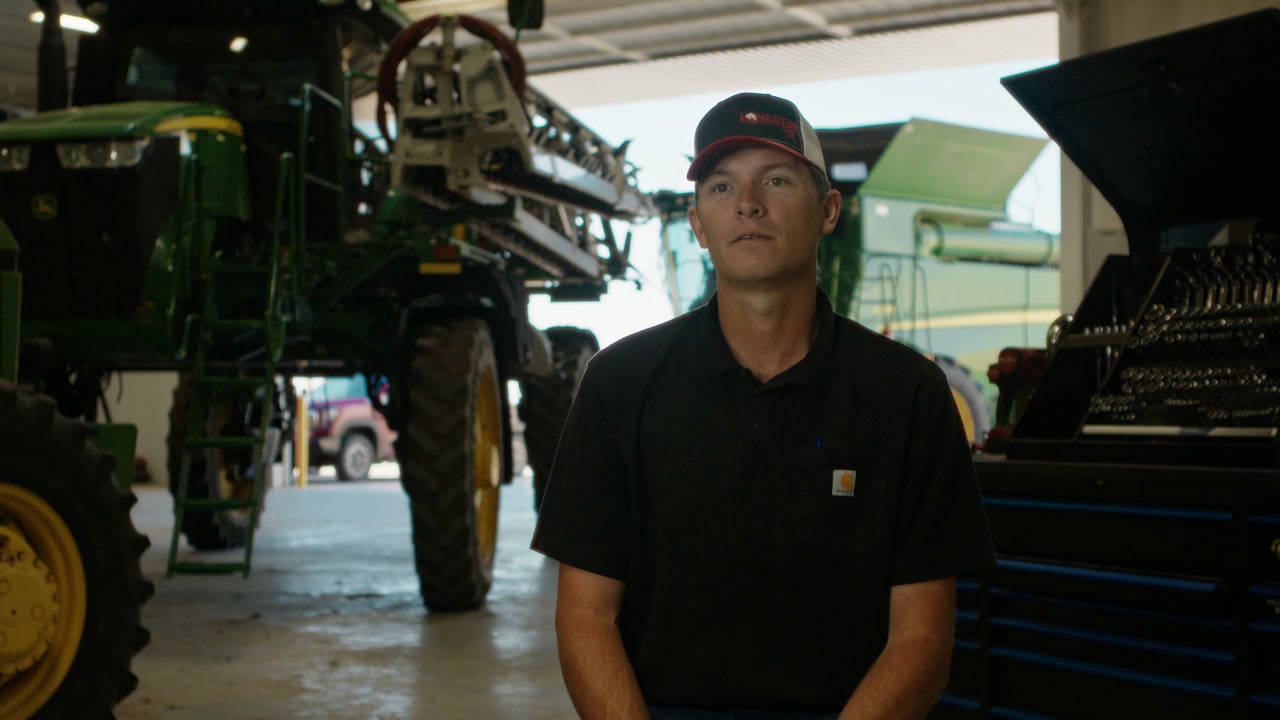
Farming runs deep in the Reinders family.
Based near Orange City, Iowa, an area known for its strong Dutch heritage, Bert Reinders is a third-generation farmer whose family history in agriculture stretches back more than 100 years. His grandfather came to the United States from Holland as a child, establishing roots in the same northwest Iowa community where the family continues to farm today.
Bert now operates the farm alongside his wife and family, with his three children and son-in-law all playing a role.
“It’s a family farm in the truest sense,” Bert says.
Today, the 1,500-acre operation focuses on growing corn and soybeans. Bert also shares equipment and trades services with a number of neighboring farms, personally spraying across several operations on top of his own during the 2026 season.
It is a decidedly local approach built around long-standing relationships rather than a traditional custom application business.
“I’m not aiming to be a total custom applicator,” Bert jokes. “I don’t want to sit in the sprayer all summer. I like to do other things.”
Before adopting Greeneye, Bert had already developed a weed-control program centered around sound agronomic fundamentals: applying a strong pre-emergence residual program in both corn and soybeans, followed by in-season herbicide applications.
When his local seed dealer introduced him to Greeneye and the potential of targeted spraying, Bert saw an opportunity to make that existing program more efficient, not replace it.
In fact, one of Bert’s biggest first-year takeaways was that targeted spraying can make those existing best practices even more valuable.
“I think a thing I learned is that what I was doing before with a strong pre-emerge application is still critical to the overall health of my fields. The Greeneye system provided strong savings across the board, but the better that field looked coming into post, the higher that number was,” Bert explains.
That lesson is already shaping his plans for 2027. Cleaner fields coming into post-emergence applications mean fewer weeds requiring treatment and greater potential to maximize the herbicide savings Greeneye can deliver.
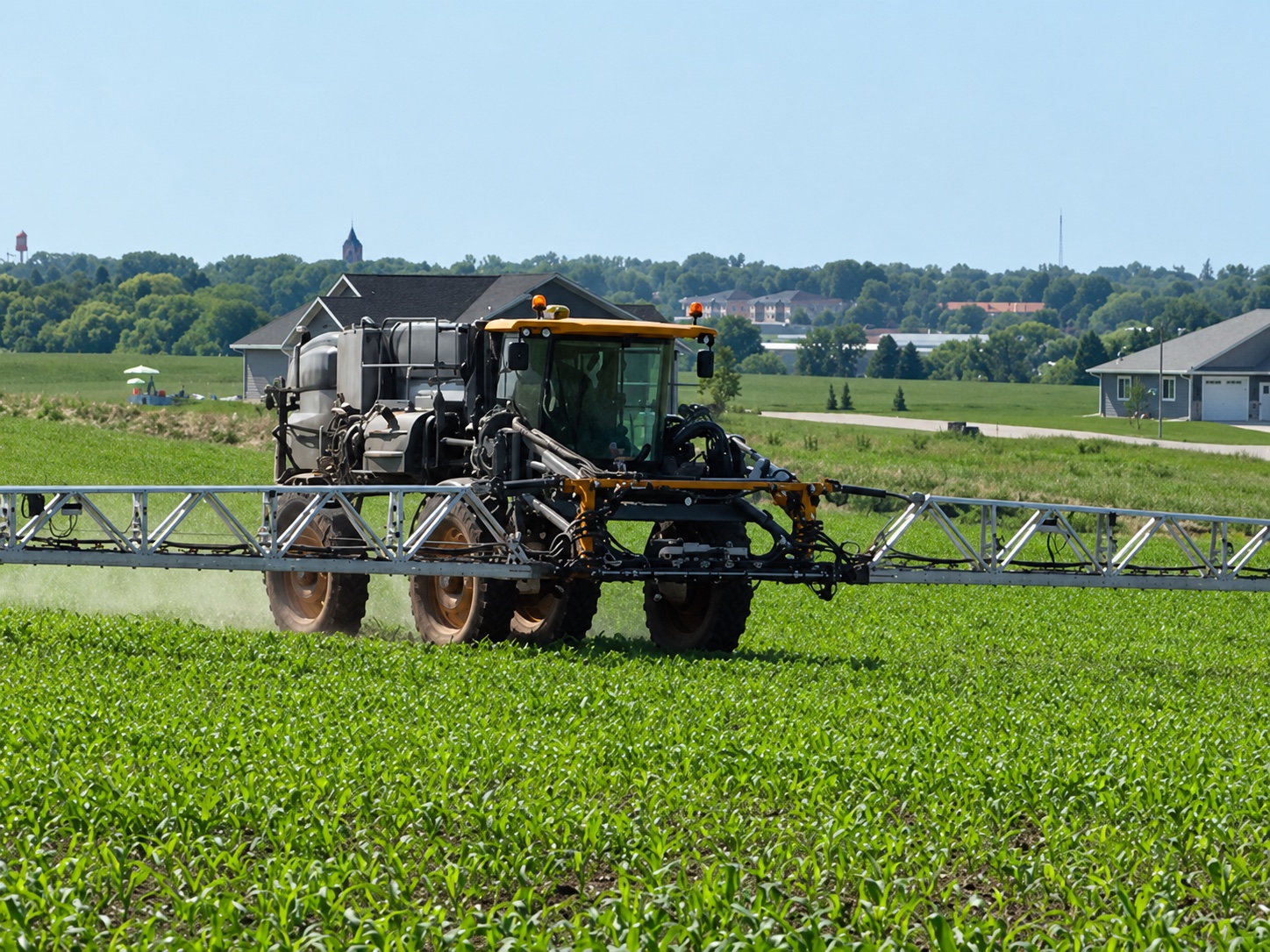
One of the clearest examples of the Greeneye system translating into herbicide savings was seen in the farm’s soybean rotation.
When pre-emergence control underperformed in several fields because of challenging conditions, Bert made three post-emergence applications with Greeneye. Rather than broadcasting herbicide across every acre each time, Greeneye allowed him to apply non-residual chemistry only where weeds were detected, with savings reaching 83%.
Across all three applications combined, Bert calculated that he used approximately the same amount of non-residual herbicide that a single broadcast application would have required.
In a typical year, he estimates he would normally have broadcast those fields twice. Compared with that scenario, Greeneye allowed him to make an additional cleanup pass across the entire field while using substantially less product overall.
That flexibility changed how Bert approached weed control. Rather than deciding whether remaining weed pressure justified another full broadcast treatment, he could make an additional targeted pass without applying herbicide needlessly across the entire field.
For Bert, Greeneye’s dual-line configuration became particularly valuable in corn. He used the dual-line system for all of his post-emergence corn applications, allowing him to broadcast residual chemistry while simultaneously targeting weeds with a separate contact herbicide.
That matters because the window for post-emergence corn applications can be short.
“We don’t typically get a second chance out here to post-apply in corn,” Bert explains. “By the time we would do it again, typically it’s too tall.”
“The opportunity to do it all in one pass is a big plus,” he says. “There’s a time savings and strong value-add in the form of increased yield because we’re able to really get all those weeds. And then of course there’s better soil health overall with less chemical…which will only serve to benefit the farm.”
Without the dual-line capability, achieving the same program could require two separate passes. With Greeneye, Bert can execute both applications simultaneously.
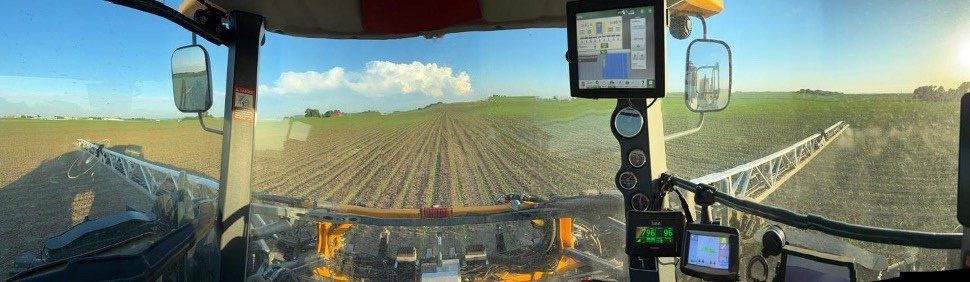
Introducing advanced technology into an existing sprayer requires more than hardware and software. For Bert, one of the standout aspects of his first season was the support behind the system.
“I’ve used aftermarket agricultural technology before and troubleshooting can be really difficult. You get different providers pointing at one another instead of solving the problem.”
With Greeneye’s Field Services team, he had a different experience.
“My support contact was awesome, so knowledgeable,” Bert says. “He’s got a history on the Hagie side, which is what I run, so that was very helpful.”
Other Greeneye employees worked directly with Bert throughout the season and followed up quickly on questions ranging from hardware upgrades to the system’s software algorithms.
After one season, Bert sees the value of Greeneye extending well beyond input savings alone.
Reducing unnecessary applications, he believes, has potential benefits for soil health and enhanced yield. And the Greeneye system’s unique design will also support more effective application rates on fields that need them, without exposing the rest of the crop unnecessarily.
“There’s substantial value in the system,” he says. “Longer term, we’ll all be better off applying less chemical across our crops.”
“Now I’ve seen it,” he says. “Now that I’ve set a baseline, let’s keep going and use our Greeneye-equipped sprayer to continue to improve those outcomes.”
Bert has already begun conversations with his chemical suppliers about how to optimize his program for next season. He plans on focusing initial efforts on strengthening early residual control to optimize targeted spraying savings and resulting yield increase. He’s also set a goal of approximately 85% herbicide savings, meaning that the targeted line sprays around 15% of the field.
“I really see that as the sweet spot for my operation,” says Bert. “That number allows me to empty the primary and Greeneye tanks at roughly the same time, which means the fewest stops possible and the most acres covered between fills.”
Bert is also interested in expanding how he uses the system’s capabilities and features.
One application he hopes to explore next season is Spray Canopy Mode, which enables the system to target the crop itself rather than weeds. Bert sees potential to use it for early-season foliar nutrition, fungicides and other crop inputs.
And with a year’s worth of field data and operating experience now behind him, the next step is not simply using Greeneye again. It’s finding out how much further he can take it.