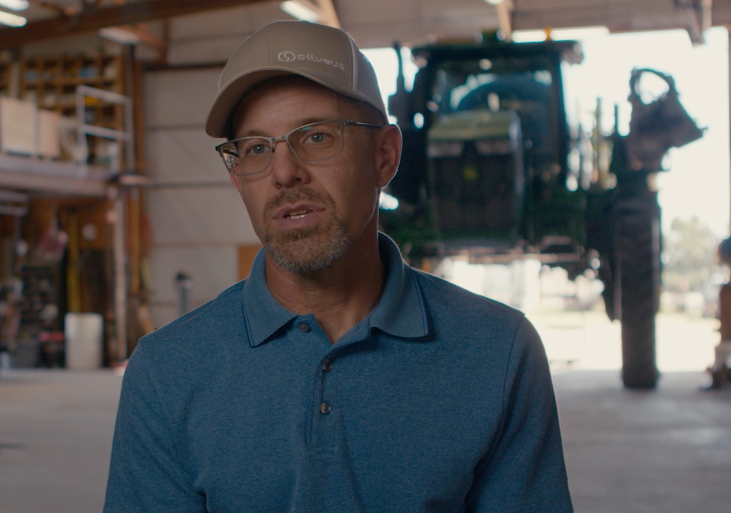
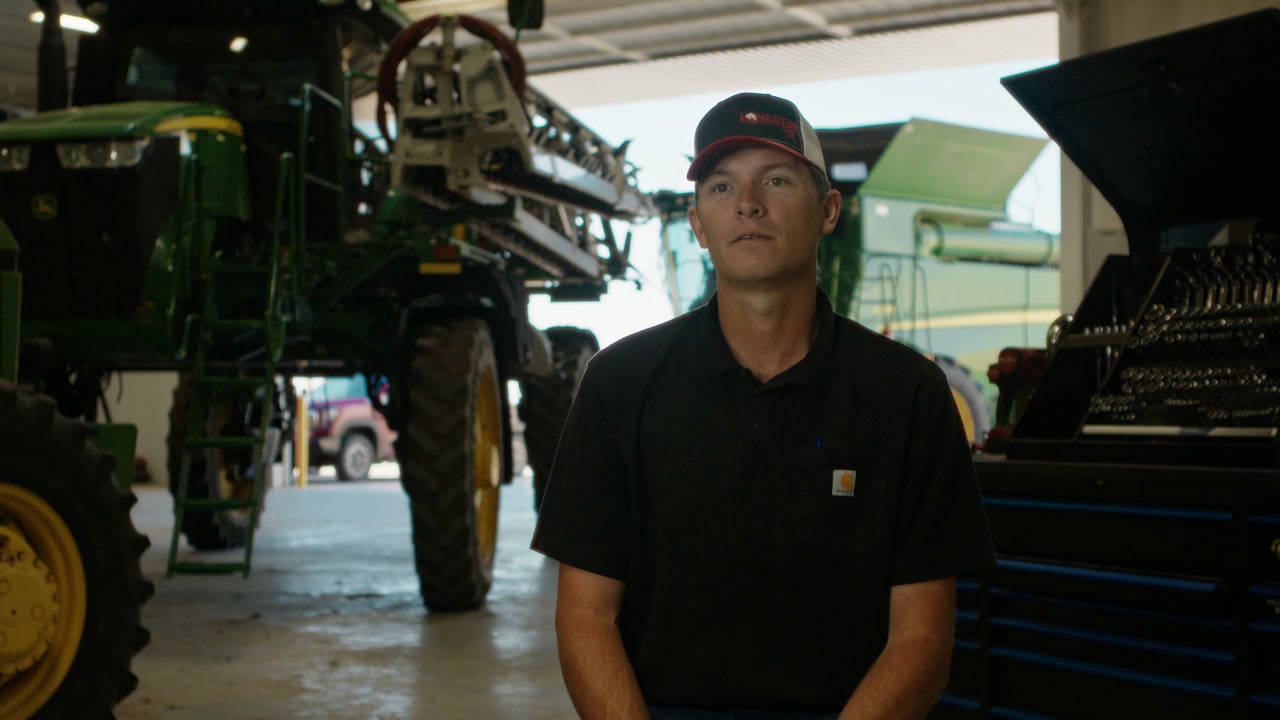
The Arthaud family has been farming its land, located in the Panhandle region of Oklahoma, for more than a century. The operation consists of Scott Arthaud, his father, Leland, and Scott’s son, Micah, as well as six full-time employees. According to Scott, farming the land inherited from his family along with additional rented land, is not taken for granted; on the contrary, it is a great blessing and privilege. As such, the Arthaud family is deeply committed to being good stewards and to protecting the land for future generations.
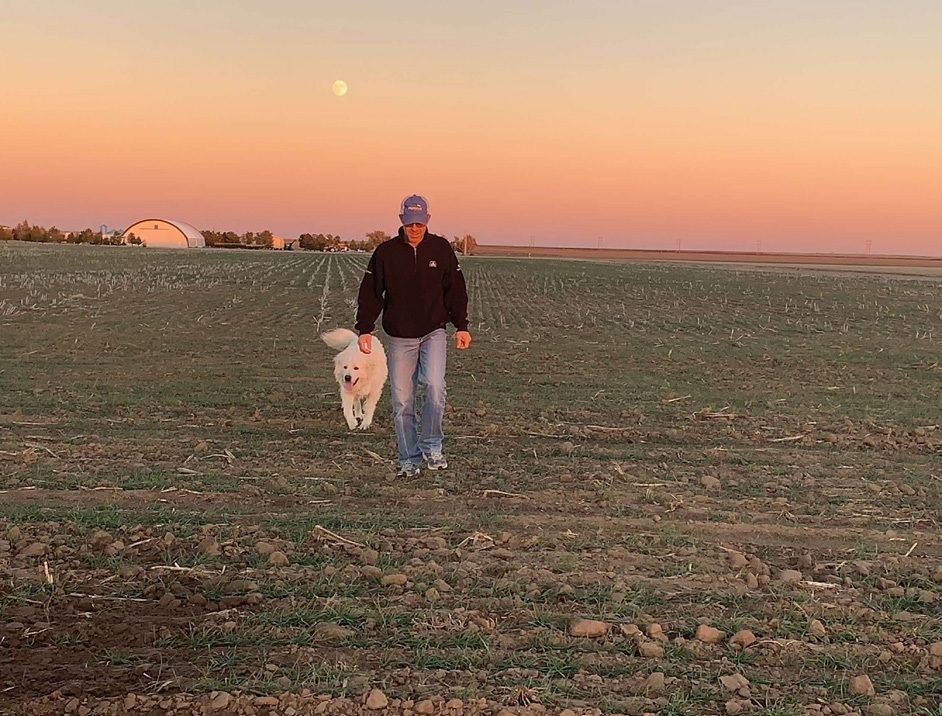
The Arthauds farm approximately 20,000 acres, around 3,700 acres of which are irrigated. Land for non-irrigated crops is split equally between wheat, grain sorghum, and summer fallow. The challenging weather conditions experienced in the region – dry climate, low rainfall, and high evaporation rates – mean the farm’s fallow period is longer than average to enable sufficient sub-moisture to form to start the next crop. As a result, the farm yields two crops every three years.
Soil erosion caused by the strong winds that are typical in Oklahoma is another daily challenge. To counter this problem and to improve yields, Arthaud Farms has made a commitment to no-till farm as much as possible. This practice worked well. However, over time, increasing resistance made some weeds, in particular Kochia, harder to economically suppress during the fallow period. This presented the Arthauds with a difficult choice – return to tillage, or find an alternative solution.
Arthaud Farms’ initial foray into precision spraying saw it adopt an early, infra-red based precision spraying technology. This achieved what it needed it to at that time – reduce herbicide use sufficiently to enable the farm to invest in more powerful inputs. However, over time the system’s limitations began to show. Chief amongst these was the fact that it could only be used for green-on-brown applications – meaning it was only suitable to use on fallow fields. There were other considerations, too. With the infra-red system, precision spraying had to be carried out separately from broadcast spraying. This meant sprayer operators had to spend more time in the field, reducing their productivity.
These and other factors led Scott to decide to don the hat of pioneer once again – this time becoming one of the first farmers in Oklahoma to purchase an AI-driven precision spraying system from Greeneye Technology.
“Precision spraying has been successful in enabling us to reduce our pre-emergence herbicide use, but we now want to be able to realize the same benefits in-crop, which the Greeneye system will enable us to do. However, we also expect it to enhance our green-on-brown spraying as well,” explains Scott. “A key benefit of the Greeneye system is the dual-tank configuration, which allows broadcast and precision spraying to be carried out simultaneously. At the moment, broadcast and precision spraying have to be carried out in separate passes with two different sprayers. With the Greeneye system, we will be able to do everything in one pass. I anticipate this will reduce the time spent in the field by at least 20% and possibly up to 40%. That’s a very significant increase in productivity.”
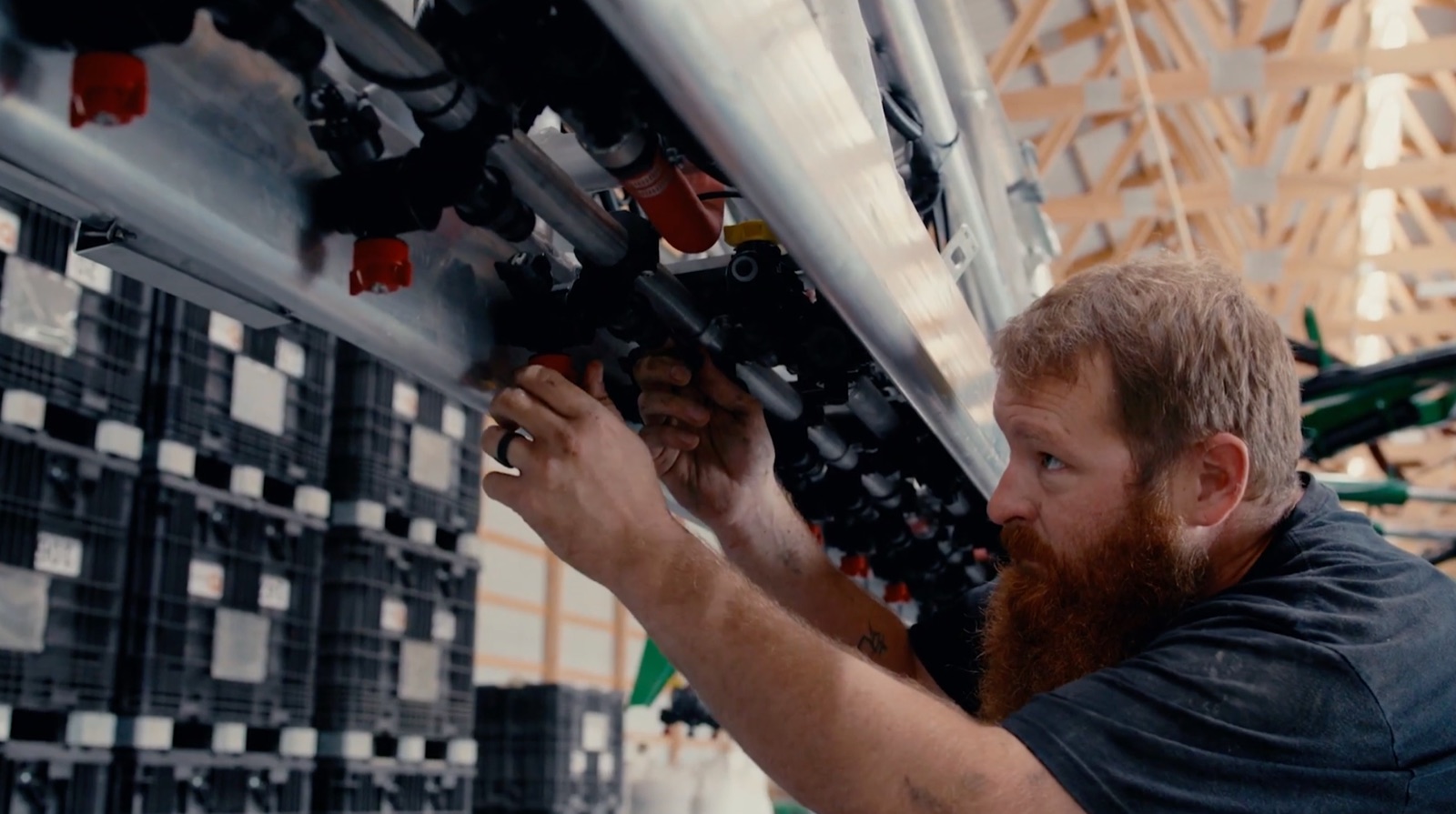
The Greeneye system uses a combination of proprietary AI technology and onboard cameras to accurately identify and spray weeds within crops. In an independent field trial, it was proven to reduce non-residual herbicide use during post-emergence spraying by 87% compared to broadcast application, while also providing the same level of efficacy. A total of 144 spray nozzles are positioned at 10-inch intervals along the Greeneye boom, providing an extremely high spraying resolution. The nozzles spray ultra-coarse droplets at a high GPA (gallon per acre), reducing drift and, consequently, crop burn by over 95%.
Uniquely, Greeneye’s precision spraying technology is designed to integrate seamlessly with most commercial sprayers. This meant Scott was able to retrofit his existing John Deere sprayer, effectively turning it into a “smart machine”, which he put into operation at the start of the 2023 season, with plans to retrofit a second sprayer with the Greeneye system if it worked as planned.
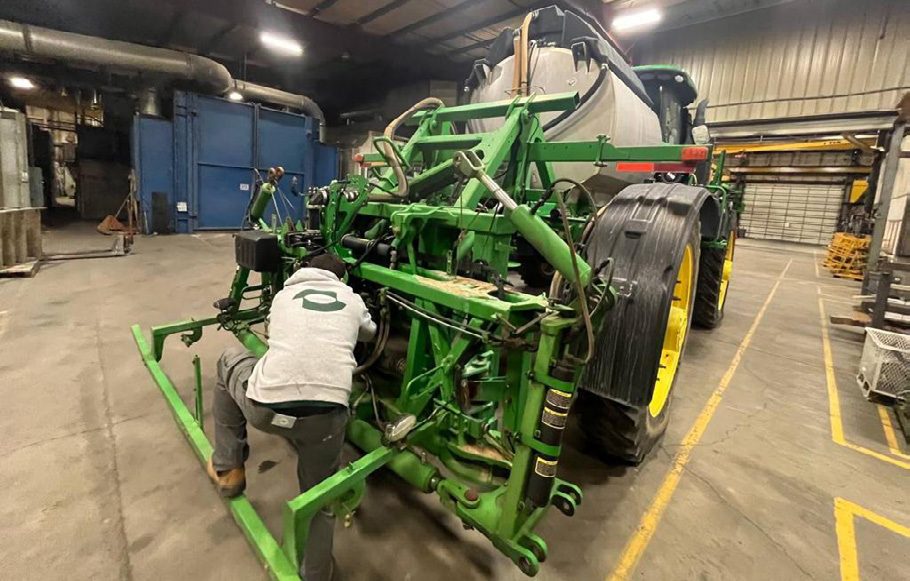
In time, Scott will also use the Greeneye system to apply foliar applications and other inputs – such as anti-fungal treatments and micronutrients – that are not affordable when applied on a broadcast basis.
He is also excited about the potential to use the field data collected by the Greeneye system to simplify and optimize many of the farm’s operations. Greeneye’s AI capabilities enable the system to collect ultra-high-resolution data from the entire field, providing valuable insights into stem count and early signs of disease.
“Greeneye is a fascinating technology that has the potential to revolutionize the way we farm. One of the things I love about being a farmer is that I have so many hats: I’m an accountant, a mechanic, and a farmer, all rolled into one. However, it can be overwhelming to utilize all of the data we bring in from the field. Greeneye’s artificial intelligence will help us make more accurate predictions and smarter decisions. It's exciting and encouraging to think about where Greeneye’s technology can lead us,” concludes Scott.