Validate spray deposition and uniformity under field operating conditions
Compare targeted and broadcast weed control
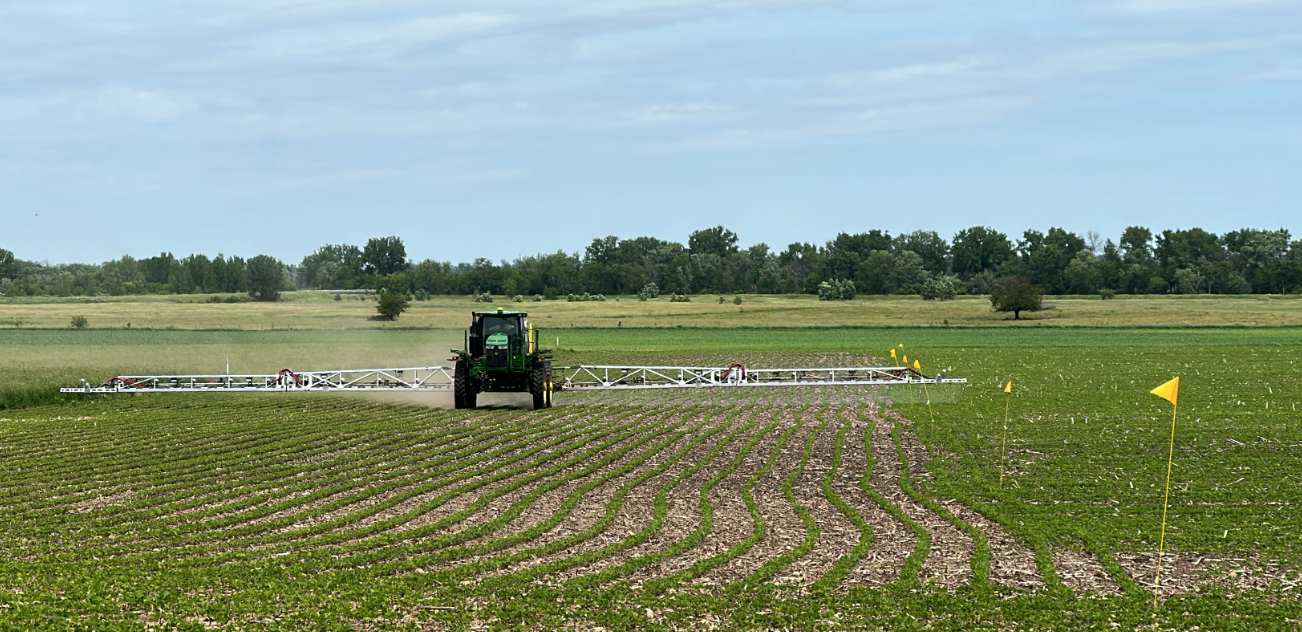
Field evaluations from 2024–2025 assessed Greeneye Technology’s AI-powered targeted spraying system in soybean production. Testing combined deposition assessments with field-scale comparisons of broadcast and targeted applications across Iowa, Minnesota, Nebraska, and South Dakota. The central question: "Can targeted applications maintain the level of efficacy seen in broadcast applications?"
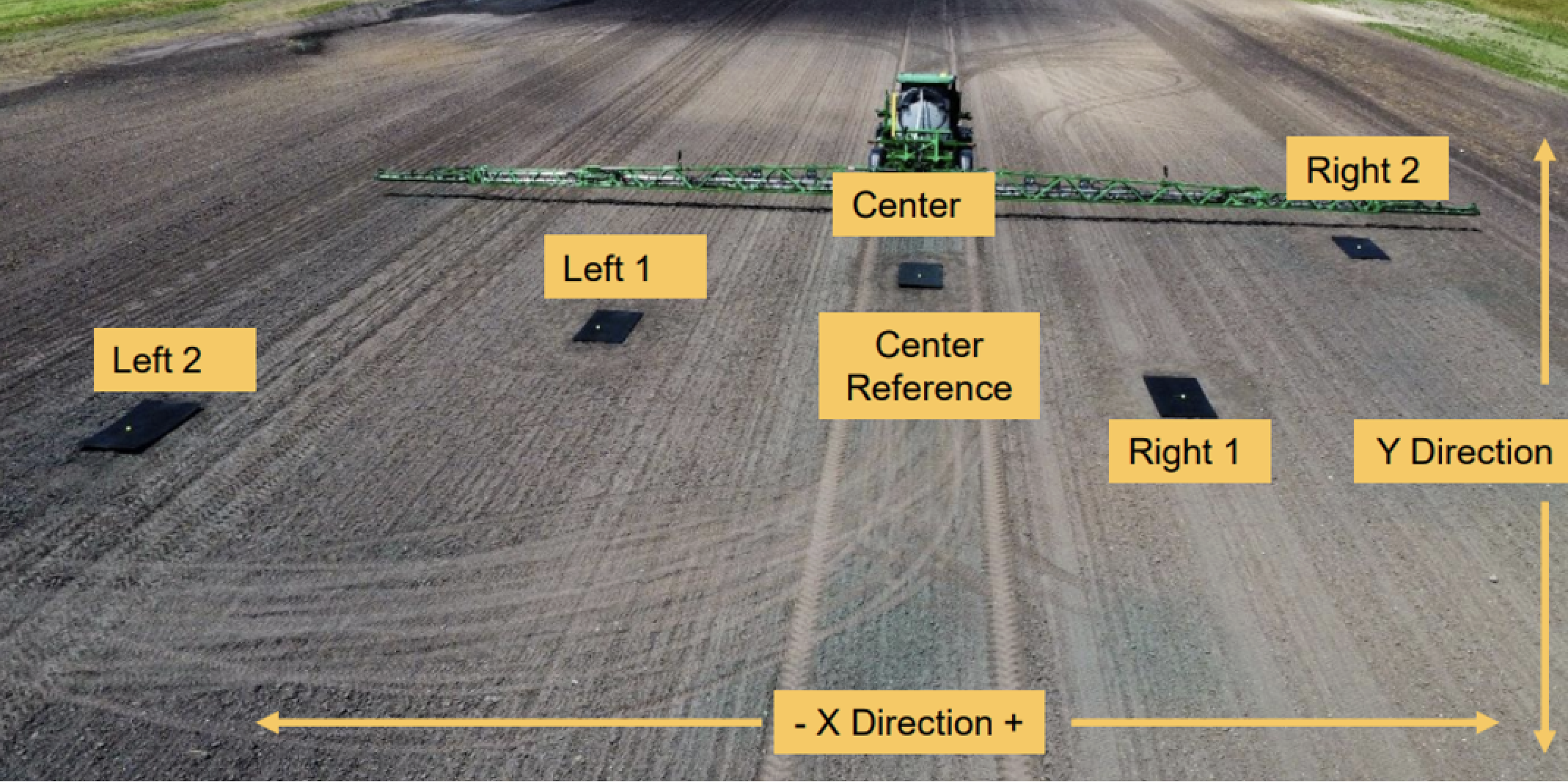
Deposition testing used equal operating settings for targeted and broadcast applications, including 12 mph travel speed, 15 gallons per acre target volume, 10-inch nozzle spacing and 30-inch boom height. The trial used three replicates and measured consistency of spray deposition across the test area.
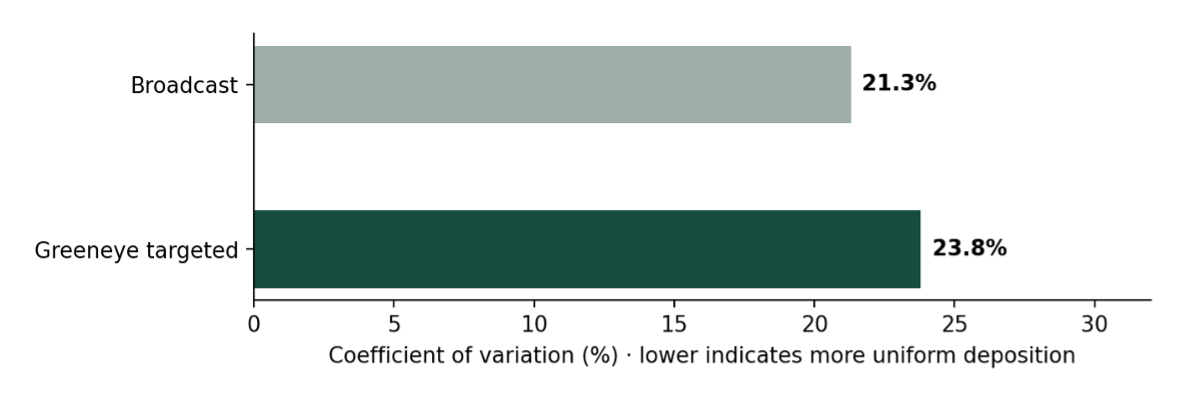
The reported deposition variability was similar: 23.8% for Greeneye targeted spraying versus 21.3% for broadcast application.
In 2024, tests at 11 locations across Iowa, Minnesota and Nebraska established system-level performance benchmarks, with estimated weed detection accuracy of at least 95%. In 2025, field trials in Iowa, Nebraska and South Dakota evaluated different pre-emergence and post-emergence treatment programs. In the Nebraska results, weed-control efficacy was 98.4% for broadcast, 96.4% for the targeted program, and 98.9% for a combined broadcast-plus-targeted program.

Deposition performance: targeted application showed spray uniformity close to broadcast under equivalent operating settings (23.8% versus 21.3% coefficient of variation).
Broadcast-equivalent weed control: tested Greeneye programs achieved 96.4–98.9% efficacy in the 2025 Nebraska comparisons.
Source: “From Deposition Accuracy to Field Scale Weed Control: A Precision Spraying Framework for Soybeans,” ACS AGRO presentation, August 24, 2026. Results presented are from a multi-year field evaluation; not all 2026 agronomic assessments were complete at presentation.